
During 2013-14, the number of investor folios for equity schemes fell by 40 lakh.

The Rs 38-trillion mutual fund (MF) industry is going through a new fund offer (NFO) rush. Since July 1, the industry has launched close to 70 NFOs. This follows the completion of a near three-month embargo period when the industry had vowed to not launch any new offerings till the time it implemented norms around pooling of investor accounts. As a result, between April and June 2022, the industry was able to launch just three NFOs.

While the regulators -- Sebi and RBI -- are yet to issue guidelines, gold ETFs certainly look more promising.

User protection and a proposal for a licensing framework for companies seeking to operate in the cryptocurrency area will be part of an upcoming consultation paper on the sector, said a senior industry executive. Even as specific regulations around crypto are yet to take shape, companies are setting up baseline user protection processes, including a redressal mechanism, fraud detection, regular filing of suspicious transaction reports (STRs), among others.

Foreign portfolio investors (FPIs) have net sold domestic shares worth over $10 billion so far this month amid a shift to China, which not only offers attractive valuations compared to India but has also announced several measures to support the economy and the stock market in recent weeks. If the trend doesn't reverse, this will be the first time that overseas funds will yank out more than $10 billion from Indian equity markets in a month.

With gold prices on the rise, financial institutions are trying different ways to attract the customer.

Divestment in top PSUs could make the ETF as big as Rs 30,000 crore.

The BRICS nations on Friday underlined the need for using local currencies in international trade and financial transactions besides committing themselves to supporting rule-based open and transparent global trade. A joint statement issued at the end of the meeting of the BRICS Ministers of Foreign Affairs and International Relations, also pressed for a robust Global Financial Safety Net with a quota-based and adequately resourced International Monetary Fund (IMF) at its centre. It further said the process of IMF governance reform under the 16th General Review of Quotas, including a new quota formula as a guide, should be completed by December 15, 2023.

Gold burnished its image as the go-to asset class during turbulent times. However, investors seemed to have missed the bus. Net inflows into gold exchange-traded funds (ETFs) plunged to a four-year low of Rs 653 crore in 2022-23 (FY23), even as gold emerged as the top-performing asset class.

WazirX lost about 45 per cent of its crypto assets to the security breach. People privy to the discussions say North Korea has been mentioned.

The swindled amount is nearly half of WazirX's total assets.
A depreciating dollar and the uncertainty in the equity markets globally are adding to the sheen of the yellow metal. With gold prices surging 20 per cent in the last two months, Gold ETFs are back in focus.

The rupee remains overvalued against the currencies of India's trading partners, even as it hit record lows against the dollar in August and September. According to the Reserve Bank of India's (RBI) real effective exchange rate (REER) index, the rupee stood at 5.5 per cent above its fair value in August, down from 7.7 per cent in July. This slight easing followed fears of a US recession and the unwinding of yen carry trades, which exerted pressure on the Indian currency.
Commodity ETFs (exchange traded funds) attempt to track the price of a single commodity, such as gold or oil, or a basket of commodities by holding the actual commodity in storage, or by purchasing futures contracts.

Two equity funds at the opposite ends of the risk matrix - small-cap and arbitrage - bucked the 'low inflow' trend in May this calendar year 2023 (CY23) to receive the highest net inflows in recent years. The Rs 3,280-crore net inflows into small-cap schemes in May was the highest for the category since the mutual fund (MF) industry started releasing fund-wise inflow data in April 2019. Arbitrage schemes raked in a net Rs 6,640 crore - the highest since July 2021.

The National Stock Exchange (NSE) Nifty Next 50 Index could undergo large-scale changes if the proposed tweaks to its computation methodology get implemented. In a discussion paper floated recently, NSE Indices, which owns and manages a portfolio of over 350 indices under the Nifty brand, proposed that only stocks that are traded in the futures and options (F&O) segment can be part of the index. Currently, as many as 11 non-F&O stocks are part of the Nifty Next 50 Index, which, as the name suggests, represents the next rung of large and liquid securities after the Nifty50.

Jio Financial Services, a unit of Mukesh Ambani's Reliance Industries (RIL), got valued at Rs 1.66 trillion ($20 billion) following an hour-long special trading session conducted by stock exchanges on Thursday. Shares of RIL's unit got priced at Rs 261.85 apiece - higher than analysts' expectations of Rs 134-224 per share. The price was arrived at after calculating the difference between RIL's Wednesday (July 19) close of Rs 2,840 and Rs 2,580, the price discovered during the first-of-its-kind pre-trade session.

While the number of international MF schemes is increasing, so is the confusion for investors.

Benchmark Sensex closed above the 85,000 level for the first time while Nifty scaled the 26,000 peak at close on Wednesday as fag-end buying in banking and power shares helped stock markets recoup early losses. After a see-saw trade during the day, the 30-share BSE Sensex rose by 255.83 points or 0.30 per cent to settle at an all-time high of 85,169.87. During the day, it surged 333.38 points or 0.39 per cent to hit a record intra-day peak of 85,247.42.

The rally in silver may continue if the global economic recovery remains on course.

Benchmark Sensex hit the historic 83,000 level for the first time on Thursday and the Nifty settled at a lifetime high after a rally in blue-chip shares, surge in global markets and foreign fund inflows. A sharp fag-end rally drove the 30-share BSE Sensex to the 83,000 level for the first time. The barometer surged 1,593.03 points or 1.95 per cent to hit its lifetime intra-day peak of 83,116.19 in the last hour of trade.

Benchmark BSE Sensex and NSE Nifty closed marginally down in a volatile trade on Wednesday due to profit taking by investors after two straight days of gains amid mixed global trends and foreign fund outflows. The 30-share Sensex dipped 17.15 points or 0.03 per cent to settle at 60,910.28. During the day, it declined 213.66 points or 0.35 per cent to 60,713.77.

India SME Forum, an organisation for small and medium businesses, has called for creating a dedicated fund of Rs 5000 crore for the export capacity development, promotion, and marketing of Micro, Small & Medium Enterprises (MSMEs) in its Budget recommendation. The forum for MSMEs with over 98,000 members said that to enhance India's global competitiveness and increase its market share in global exports, it was "crucial to increase the number of active exporters and enable at least 3-4 lakh first-time micro, small, and medium exporters while supporting them in promoting Indian products globally."

Among the 30 Sensex companies, Power Grid, Axis Bank, State Bank of India, Bajaj Finserv, Reliance Industries and NTPC were the biggest gainers. Tech Mahindra, Infosys, Wipro, HCL Technologies and Titan were among the laggards.

Existing mutual fund investors have time till March 31 to nominate a beneficiary or opt out of it by submitting a declaration form, failing which their folios will be frozen, and they will not be able to redeem investment. The Securities and Exchange Board of India (Sebi), in its circular on June 15, 2022, made it mandatory for mutual fund subscribers to submit the nomination details or declaration to opt out of the nomination on or after August 1, 2022. Later, the deadline was extended to October 1, 2022.

US short-seller Hindenburg Research had shared an advance copy of its damning report against Adani group with New York-based hedge fund manager Mark Kingdon about two months before publishing it and profited from a deal to share spoils from share price movement, according to market regulator Sebi. The Securities and Exchange Board of India (Sebi), in its 46-page show cause notice to Hindenburg, detailed how the US short seller, the New York hedge fund and a broker tied to Kotak Mahindra Bank benefited from the over USD 150 billion routs in the market value of Adani group's 10 listed firms post-publication of the report.

An analysis by the Securities and Exchange Board of India (Sebi) has revealed that retail traders remain at the wrong end of the stick when it comes to equity derivatives trading. About 93 per cent of them incurred an average loss of Rs 2 lakh (per trader) during the last three financial years. The new report highlights an increase in the loss-making individual investors in futures and options (F&O) to 91.1 per cent in FY24 compared to 89 per cent in FY22.

Equity benchmark indices Sensex and Nifty settled lower for the sixth straight session on Monday due to heavy selling in bellwether stocks including HDFC Bank and Reliance Industries amid mixed trends in the global markets and outflow of foreign funds. Falling for the sixth consecutive session, the BSE Sensex tumbled 638.45 points or 0.78 per cent to settle at 81,050. During the day, it plummeted 962.39 points or 1.17 per cent to 80,726.06. The NSE Nifty slumped 218.85 points or 0.87 per cent to end at 24,795.75.

A primer on tax you pay on your mutual fund gains

Experts say the worst is over for the global economic markets but the markets don't seem to fully agree as they still fluctuate and remain unpredictable.

Technology firm Wipro has a "high probability" of getting included in the benchmark Sensex, while two-wheeler major Bajaj Auto is the "most likely" deletion candidate, according to an analysis done by Brian Freitas, an analyst at independent research provider Smartkarma. The changes to the index will be announced mid-November, and will become effective from December 17. The December review uses the 6-month average market capitalisation and trading turnover data between May 1 and October 31 to determine changes.
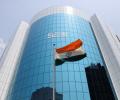
If Hindenburg or its partner do not join the investigation, then Sebi may pass an ex-parte order against it, which may be enforced as a foreign award in US courts.

'India's fundamentals are a lot better (than those of other emerging market economies).' 'India will suffer (witness a fall in its stock market) what I call the second order effect.' 'And the second order will happen when these funds (belonging to macro and hedge fund investors and which have leveraged Japanese yen-carry trades), because they lose money elsewhere as lot of their positions were financed by borrowing Japanese yen, will have to book profits in investment destinations where they are making money, including in markets like India.' 'They (these investors) will have to effectively sell in countries like India and which is the consequence (the crash in equity markets) that Indian markets might see.'

Importantly, is there hope going forward?

rediffGURU Ramalingam Kalirajan answers your personal finance queries.

Stock exchanges have intensified vigil on Small and Medium Enterprise (SME) listings by mandating more comprehensive financial disclosures and enhanced monitoring of utilisation of issue proceeds from investment bankers, amid rising instances of dubious practices. Bourses - responsible for vetting initial public offering (IPO) documents and granting approvals to SMEs - have tightened norms in recent weeks with further measures planned for new filings to safeguard investor interests, sources said.

Benchmark indices fell for the third straight day on Tuesday, with the Sensex falling over 153 points amid largely weak global markets as investors remained cautious ahead of the crucial Federal Reserve meeting outcome. Unabated foreign fund outflows also continued to weigh on the domestic equity markets. The 30-share BSE benchmark dropped 153.13 points or 0.29 per cent to settle at 52,693.57.

Following the money and freezing anything unaccounted is the only way to set an example for others, suggests Debashis Basu.
As the Indian stock market gyrates to the tune of global uncertainties, investors are looking out to invest their moneys in safe haven. Gold, in virtual form, can obviously be one of those safe havens. But if you are not convinced here are 7 reasons why you must invest in gold exchange traded funds.

UTI Mutual Fund has launched UTI-FAMILY (that allows investors to buy mutual fund units in their name, but the returns go straight to a parent's bank account.
